
Multi-Chain Token Approval Management: How Rabby Wallet Changes the Security Decision
A wallet can hold no valuable tokens and still expose you to meaningful risk. The reason is counterintuitive: many DeFi losses do not begin with a stolen seed phrase or an obviously malicious transfer. They begin with an approval, a permission quietly granted to a smart contract. Once approved, that contract may be able to move a token from your address later, subject to the allowance you set and the contract’s behavior. In a multi-chain wallet, the same problem is repeated across networks, applications, and assets. Managing approvals is therefore less like tidying a wallet and more like managing a collection of standing authorizations.
That distinction matters for US-based DeFi users who move between Ethereum-compatible networks, decentralized exchanges, lending markets, bridges, and yield applications. A wallet such as Rabby can make transaction context easier to inspect, but it cannot turn an unsafe contract into a safe one or eliminate the need for judgment. The useful question is not simply whether Rabby is convenient. It is whether its workflow helps you reduce uncertainty before signing, while making the limits of wallet-level protection visible.
What a token approval actually does
Most ERC-20-style tokens use a separate permission model for spending. If you want to trade a token through a decentralized exchange, you may first approve that exchange’s contract to spend a specified amount on your behalf. The exchange then uses a transfer function to move the token when you swap. The approval is not the swap itself; it is a standing instruction that can remain in place after the trade has finished.
This creates a mental-model problem. Users often think, “I sent tokens to the application once.” Technically, they may have authorized a contract to request tokens later. The distinction becomes important when an application is compromised, its contract contains a vulnerability, its website is taken over, or a user interacts with the wrong contract. An unlimited approval does not mean the token will definitely be taken, but it can enlarge the consequences of a future failure.
Approvals are also chain-specific. An allowance granted on Ethereum is not automatically an allowance on Arbitrum, Base, Polygon, or another compatible network. That sounds reassuring, but multi-chain activity creates a different hazard: fragmentation. A user may remember revoking an approval on one chain while an older allowance remains active elsewhere. The address may look identical across networks, yet the contracts, balances, and permissions are separate environments.
There is another subtle boundary. Revoking an approval generally requires an on-chain transaction and therefore network fees. It does not erase the history of previous transfers, undo a compromised transaction, or recover assets already moved. Nor does it necessarily solve every token-permission design, because some protocols use different contract patterns or routes. Approval management reduces future exposure; it is not a time machine.
Three ways to manage approvals
Manual management through explorers
The most transparent approach is to inspect allowances through a block explorer or a contract-specific tool, select an approval, and submit a revocation transaction. This method offers strong control because you can examine the chain, token, spender address, and transaction details directly. It is also the least forgiving operationally. You must choose the correct network, identify the correct spender, understand whether an allowance is still needed, and pay the associated fee.
Manual review is often best for high-value wallets or unusual contracts. It encourages careful questioning: Is this spender the protocol I intended to use? Is the allowance unlimited? Is the asset still held on this network? Does revoking it interfere with an active position? The drawback is that block explorers expose raw information rather than a complete risk narrative. A familiar-looking address can still be the wrong contract, and a low allowance can still matter if the token is valuable or the contract is untrusted.
Wallet-centered management with Rabby
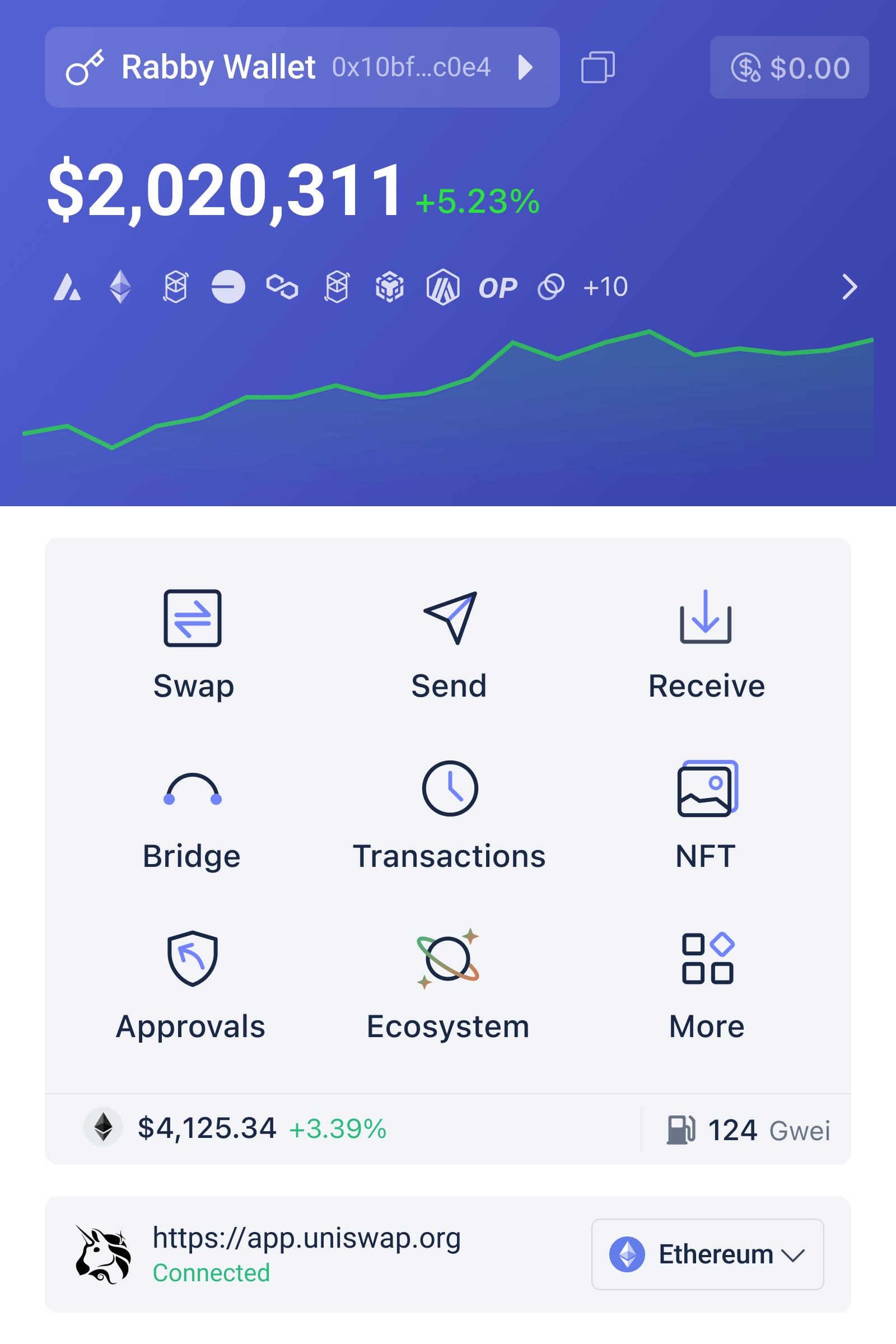
A wallet-centered workflow places permission review closer to the moment of signing. Rabby is designed for multi-chain, EVM-compatible activity and is known for presenting transaction context and warning signals before a user confirms an action. Depending on the current version and supported network, its interface may help users identify approvals, inspect what a transaction is attempting to authorize, and organize activity across chains more clearly than a single-network routine.
That convenience has a real security benefit: it can reduce context switching. When a user does not need to jump between several websites, the chance of checking the wrong chain or overlooking a contract interaction may fall. If you are installing the extension, use the official source and verify the publisher, browser permissions, and installation prompts before importing or creating a wallet. A genuine wallet extension should never require you to disclose a seed phrase to a support agent, website form, or unrelated application.
Still, Rabby should be treated as an inspection and signing aid, not as an autonomous security referee. Simulation results and warnings depend on available data, contract behavior, chain support, and the transaction being analyzed. A transaction that appears to succeed safely in a simulation may interact with conditions that change later. Conversely, a warning may reflect unusual but legitimate contract behavior. The right response is investigation, not automatic approval or automatic panic.
Protocol-specific dashboards and dedicated tools
Dedicated approval dashboards can be useful when you want a broad inventory of allowances, especially across several assets or addresses. They may provide more specialized filtering than a wallet interface. Their weakness is an additional attack surface: you must connect your wallet to another website and ensure that the displayed data and requested transactions correspond to the intended action.
This is the central trade-off. Manual tools maximize direct visibility but demand more technical attention. Wallet-centered tools improve workflow and reduce friction but can encourage users to outsource judgment to warnings. Specialized dashboards may offer richer inventories but require another trust decision. No option dominates in every situation. A prudent user may use Rabby for routine transaction review, then independently verify a high-value or confusing approval before revoking or keeping it.
Why “unlimited approval” is a risk-management choice
Many DeFi applications ask for a large or effectively unlimited allowance because repeated approvals create extra transactions and user friction. From the protocol’s perspective, this can improve usability. From the user’s perspective, it changes the exposure profile. A limited approval may require another transaction later, but it narrows the amount a spender can draw under the token’s approval rules. An unlimited approval is more convenient, yet it leaves a larger potential loss if the spender becomes dangerous.
The decision should depend on more than habit. Consider the value of the token, how often you use the protocol, whether the contract is mature and well understood, and whether you are using a dedicated wallet for experimentation. A small allowance on a low-value test wallet is not equivalent to a large allowance on a wallet holding long-term savings. Nor is a familiar brand a guarantee: front-end compromise, governance changes, upgradeable contracts, and user-interface mistakes can all alter the practical risk.
A useful framework is to separate three questions. First, what can this transaction do immediately? Second, what permission will remain after it completes? Third, what would I lose if this spender were compromised tomorrow? The third question is frequently neglected because the transaction itself may look harmless. Approval management becomes more effective when you evaluate the residual permission, not just the visible outcome.
A practical multi-chain approval routine
Before signing, confirm the network and account. Identical wallet addresses across EVM chains can create false confidence, while the selected chain determines which balances, contracts, and allowances are relevant. Read the token and spender names carefully, but do not rely on names alone; contract addresses are more reliable identifiers than branding or a familiar logo.
Next, distinguish an approval from an ordinary transfer or contract call. Ask whether the request is for the amount you expect, whether the allowance is limited or unlimited, and whether the spender is the protocol contract rather than an unexpected intermediary. If the wallet provides a transaction simulation or warning, use it as evidence to examine rather than a green light to skip examination.
After completing a one-time interaction, decide whether the permission still has a purpose. If you no longer use the application, revoking the allowance can reduce the future attack surface. Keep records of which approvals are intentionally retained, especially when operating several addresses. A simple written inventory of chain, token, spender, and purpose is surprisingly useful during a stressful incident.
For higher-risk activity, consider compartmentalization. A wallet used for testing new applications should not automatically be the wallet used for long-term holdings. Separate accounts do not make a malicious contract harmless, but they can limit the blast radius of a mistaken signature or dangerous approval. Hardware signing can strengthen key protection, yet it does not make a user’s approval decision correct; a hardware device can securely sign a harmful transaction.
If you are ready to install the browser extension, review the rabby extension download information carefully, then verify that the installation source is authentic before entering any wallet credentials. After installation, start with a low-value account or a small test transaction. Confirm the extension’s permissions, check the selected network, and avoid importing a seed phrase into any page that is not clearly part of the wallet’s trusted setup flow.
What Rabby can and cannot solve
Rabby can improve visibility at a critical moment: just before a user signs. That is valuable because smart-contract transactions are difficult to interpret from raw calldata, the encoded instructions sent to a contract. A clearer interface may expose the intended action, token movement, or approval request in terms a user can evaluate. In a multi-chain setting, reducing ambiguity is itself a security improvement.
But visibility is not the same as verification. A wallet cannot guarantee that a protocol will remain honest, that a contract will not be upgraded, or that a token has no hidden transfer restrictions. It may also have incomplete information for novel contracts or unusual transaction paths. Users should treat automated analysis as one layer in a defense system alongside cautious account separation, limited permissions where practical, secure key handling, and independent verification of sensitive actions.
The near-term implication is conditional rather than dramatic. If DeFi applications continue to spread activity across many EVM networks, approval inventories and cross-chain context will become more important, not less. Wallets that make permissions legible may reduce routine mistakes. However, convenience could also produce a new failure mode if users assume that a warning system has replaced due diligence. The signal to watch is whether tools help users understand why a transaction is risky, rather than merely assigning it a reassuring color.
Frequently asked questions
Does revoking a token approval return my funds?
No. Revocation changes what a contract may spend in the future. It does not reverse a completed transfer, recover stolen tokens, or remove prior blockchain records. If assets have already moved without authorization, revoking remaining approvals may limit additional loss, but it cannot undo the earlier transaction.
Are approvals shared across Ethereum-compatible networks?
Generally, no. Allowances are recorded by contracts on a particular network. The same address may exist on several chains, but an approval on one chain does not normally authorize the same spender on another. Review each active chain separately and be cautious when a wallet interface groups multi-chain activity into one view.
Is a limited approval always safe?
No. A limited allowance can reduce the maximum amount available to a spender, but it does not prove that the spender is legitimate. A malicious contract can still misuse the approved amount, and repeated small approvals can become costly or confusing. Limiting permissions is one control, not a substitute for checking the contract and transaction.
The sharper mental model is simple: every DeFi interaction has both an immediate effect and a permission trail. Rabby can help make that trail easier to see across supported chains, but the final security boundary remains the user’s decision about what to authorize, where, and for how long. In a market built on composability, disciplined permission management is not extra housekeeping. It is part of custody.